

Pope John XV: Politics, Power, and the First Papal Canonization
Pope John XV ruled the Catholic Church from 985 to 996, during one of the most politically fragile periods in medieval papal history. The papacy of the late tenth century was not the commanding institution it would later become under reforming popes like Gregory VII. Instead, it was a prize fought over by Roman noble families, German emperors, and competing factions who saw control of the papal throne as a path to influence.
John XV inherited a papacy weakened by years of political instability. He spent his eleven-year reign attempting to preserve the authority of the pope while navigating a world where the bishop of Rome was often forced to negotiate with the very powers that surrounded him.
Early Life and Rise to Power
John XV was born in Rome, the son of Leo, a Roman presbyter. Like many churchmen of the era, his early career unfolded in the complicated relationship between religion, family connections, and Roman politics.
The tenth century was a difficult time to be pope. The city of Rome was dominated by powerful aristocratic families who viewed the papacy as part spiritual office, part political tool. The pope was expected to lead the Church, but he also had to survive the ambitions of the families who controlled the streets, the Senate, and the machinery of Roman power.
John XV became pope in 985 following a period of intense turmoil. His predecessor, Pope John XIV, had been overthrown and imprisoned during the return of the antipope Boniface VII, whose brief and controversial rule was supported by powerful Roman interests.
When John XV was elected, he did so with the backing of John Crescentius II, the leader of one of Rome’s most influential noble families. Crescentius controlled much of the city’s political life, meaning the new pope’s position depended heavily on cooperation with the faction that had helped place him on the throne.
The arrangement reflected a reality of the age: the papacy was a spiritual institution, but the pope still had to operate in a world of rival families, military threats, and imperial ambitions.
The Papacy of John XV
Despite the political limitations surrounding him, John XV worked to expand papal influence beyond Rome.
One of his most significant achievements came in 993 when he canonized Bishop Ulrich of Augsburg. While local saints had been recognized before, Ulrich’s canonization is considered the first recorded instance of a formal papal canonization process.
This was an important development. By declaring a saint through papal authority, John XV helped establish a precedent that would eventually make the pope the central authority in determining official recognition of saints throughout the Catholic Church.
Reform and the Question of Church Authority
John XV lived during the early stages of the reform movements that would transform the medieval Church in the eleventh century.
He supported elements of the Cluniac reform movement, which sought greater discipline among clergy and a renewed focus on spiritual life. However, his own leadership style drew criticism, particularly from those who believed the papacy was too closely tied to family influence and political bargaining.
The tension was clear: John XV supported reform, but he ruled within a system that was still deeply shaped by the politics of Rome.
The great papal reforms were still decades away. For John XV, the challenge was not rebuilding the Church from the ground up, it was keeping the institution alive long enough for future generations to strengthen it.
Kings, Emperors, and Medieval Diplomacy
John XV maintained relationships with powerful figures across Europe, including the imperial court of the young Otto III. The emperor’s regents, Adelaide of Italy and Theophano, played important roles in European politics during this period and helped balance the competing factions within Rome.
John XV also intervened in disputes beyond the Italian peninsula, demonstrating that the papacy was becoming more than a local Roman institution. The pope was increasingly acting as a mediator between kingdoms, rulers, and bishops.
The medieval papacy’s diplomatic power was still developing, but John XV helped lay some of the groundwork for the influential role later popes would play in European politics.
The Peace of Rouen
One of John XV’s most notable diplomatic achievements came in 991, when his representative Leo of Trevi helped negotiate the Peace of Rouen between King Æthelred II of England and Duke Richard I of Normandy.
The agreement helped settle tensions between the two rulers and showed the pope’s growing role as an international mediator.
There were no crusades during John XV’s lifetime (the famous crusading movement would not begin until nearly a century later) but the papacy was already becoming involved in conflicts far beyond Rome.
Controversies and Political Struggles
John XV’s greatest challenge remained the politics of Rome itself.
Critics accused him of nepotism and of favoring members of his own family. Whether exaggerated or not, these accusations damaged his reputation and provided ammunition for his opponents.
He also became involved in the complicated Reims controversy, a dispute over the leadership of the archbishopric of Reims. John opposed attempts to remove Archbishop Arnulf and later condemned Gerbert of Aurillac, one of the most brilliant scholars of the age.
The dispute revealed a larger question that would dominate medieval Christianity for centuries:
Who had the ultimate authority over bishops; the pope, kings, or local powers?
John XV did not resolve the question, but his actions showed that the papacy was increasingly willing to assert itself in major church disputes.
Papal Highlights
During his reign, John XV:
- ● Established the first recorded papal canonization by declaring Bishop Ulrich of Augsburg a saint in 993.
- ● Helped negotiate the Peace of Rouen in 991, demonstrating the papacy’s growing diplomatic role.
- ● Intervened in the Reims controversy, asserting papal authority in a major ecclesiastical dispute.
- ● Worked to strengthen the papacy despite the influence of Roman noble factions.
Death and Legacy
By the final years of his reign, John XV’s relationship with Roman political forces had deteriorated. Facing opposition in the city, he was forced to leave Rome and seek support from Tuscany and the imperial court of Otto III.
John XV returned to Rome but died of fever in March 996, before Otto III arrived for his planned imperial coronation.
Otto III moved quickly to influence the succession and appointed his young relative Bruno as pope. Taking the name Gregory V, he became the first German pope and represented the growing influence of the empire over the papacy.
John XV helped establish papal canonization as a formal process, expanded the pope’s role as an international mediator, and continued the slow movement toward a papacy that could act independently of local political forces.
Read more articles in The Medieval Papacy series

Pope John IV: The Dalmatian Pope Who Ransomed Captives and Fought Heresy

Pope Sergius III: Murder, Scandal, and the Dark Age of the Papacy
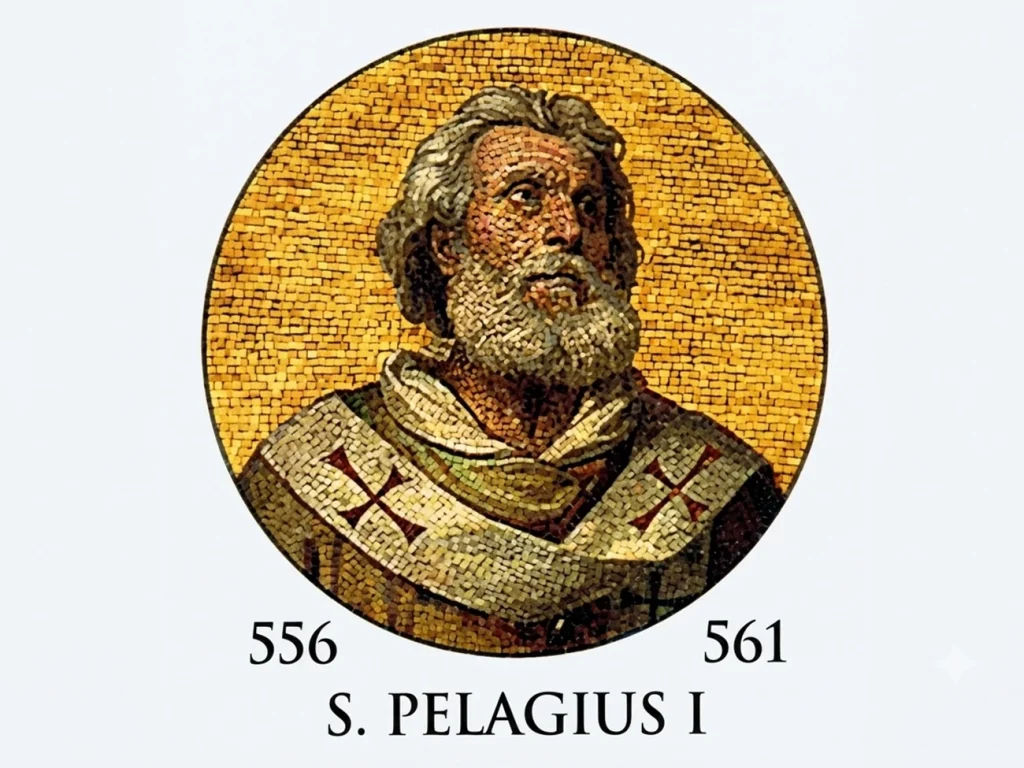
Pope Pelagius I: The Controversial Sixth-Century Pope
🏰 Medieval Archives Weekly
Love stories like this? Every week we deliver papal struggles, forgotten battles and royal intrigue of the Middle Ages
2026 Special Feature
2026 marks the 960th anniversary of the Norman Conquest. To celebrate, our weekly newsletter is embarking on a year-long journey through the Bayeux Tapestry.
Every week, we “unroll” a new panel, decoding the secrets, the drama and the history of 1066.
Join thousands of fellow medievalists and sign up for free.


