The Siege of Lisbon
Crusading Opportunism and the Making of a Kingdom
The Siege of Lisbon in 1147 stands as one of the most consequential events of the Second Crusade and a pivotal moment in the early history of Portugal. What began as a fleet of northern European crusaders bound for the Holy Land became an improvised alliance that reshaped the political landscape of the Iberian Peninsula.
The siege illustrates the fluidity of crusading aims, the interplay between local and international forces, and the role of circumstance in determining historical outcomes.
Early Context
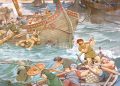
In May 1147, a fleet of approximately 164 ships departed from Dartmouth, carrying an estimated 13,000 crusaders from England, Scotland, Germany, and Flanders. Organized into shipboard communities, each with its own priest and internal governance, the fleet represented a diverse coalition of townspeople rather than royal armies. Their destination was the Holy Land, where the Second Crusade was underway.
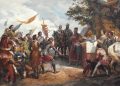
A severe storm in the Bay of Biscay forced the fleet to seek refuge in Porto, located in the young County of Portugal. The Crusaders encountered Afonso Henriques, who had declared himself king but lacked control of a major urban center. Recognizing an opportunity, Afonso proposed an alliance: if the crusaders assisted him in capturing the Moorish‑held city of Lisbon, they would receive the spoils of victory, including ransom payments and rights to surrounding lands. The crusaders accepted, redirecting their expedition toward the mouth of the Tagus River.
Rise to the Siege
In 1147, Lisbon was a large, multicultural city protected by the Cerca Moura, a system of fortified walls that followed the contours of the surrounding hills. The crusaders arrived in late June and encircled the city by July 1. The siege that followed became a showcase of medieval engineering and international cooperation.
Different contingents contributed specialized skills:
- Flemish and German forces focused on mining operations, attempting to undermine the walls.
- English and Norman forces constructed large siege engines, including a towering wooden structure designed to overtop the defenses.
- A group of English soldiers operated a protective shelter described in contemporary accounts as a “Welsh Cat,” a woven structure used to shield workers from defensive projectiles while they extinguished fires set by the city’s defenders.
The siege lasted several months. By October, the city’s population faced severe food shortages. When the large siege tower reached the walls on October 21, the Moorish governor realized the Crusaders were going to breach the city and agreed to surrender.
Battlefield Dynamics
Negotiations for surrender were intended to ensure the safety and property of Lisbon’s inhabitants. However, once the gates opened on October 25, discipline among the crusading forces broke down.
Contemporary accounts describe widespread disorder as some groups sought material gain in defiance of earlier agreements.
Despite the turmoil, the siege marked a decisive turning point. Many crusaders, particularly from Germany and Flanders, continued on to the Holy Land, but a significant number of English and Norman participants remained in Portugal.
They accepted the lands promised by Afonso Henriques and became part of the emerging Portuguese aristocracy. One of them, Gilbert of Hastings, was chosen as the new Bishop of Lisbon, symbolizing the integration of the crusaders into the region’s political and religious structures.
Aftermath
The capture of Lisbon was the only major Christian victory of the Second Crusade, a campaign otherwise marked by setbacks in the eastern Mediterranean. For Portugal, the victory was transformative. It secured Afonso Henriques’s position as king and established Lisbon as a central stronghold in the Christian reconquest of the Iberian Peninsula.
The siege also demonstrated the unpredictable nature of crusading movements. A fleet originally bound for the Levant became a decisive force in Western Europe due to a storm, a strategic offer, and the ambitions of a local ruler. The event highlights the flexibility of crusading ideology, which could be redirected toward regional objectives when circumstances aligned.