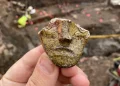
Archaeologists have made a major historical discovery during expansion work on Hungary’s iconic M1 motorway, uncovering both a large medieval cemetery and the remains of a short-lived settlement that dates back more than a thousand years.
During preparatory excavations tied to the road project, researchers from the National Archaeological Institute (Nemzeti Régészeti Intézet) documented more than 100 graves belonging to a late Avar row cemetery, with burial features and artifacts suggesting use from roughly the 8th to the 11th centuries. These earlier medieval Avar finds are rare and are expected to provide fresh insights into the region’s early population and burial customs.
The Avars were a powerful nomadic confederation who arrived in the Carpathian Basin in 568 AD, founding the Avar Khaganate. They established themselves as a dominant force in Central and Eastern Europe, reshaping warfare, trade, and political power in the region.
The Avar Khaganate collapsed in the early ninth century, but the Avars did not disappear; they were gradually absorbed into the emerging medieval Hungarian state, becoming one of the many cultural and genetic layers that shaped the region’s later history.
In addition to the cemetery, specialists working with the Rómer Flóris Art and Historical Museum (Rómer Flóris Művészeti és Történeti Múzeum) uncovered structural remains from the 11th-century Árpád period, including house foundations, ovens and ditches.
Read more of the story on Daily News Hungary